
Noon. The bakery wants an announcement. Saturday, 9 to 2, 14 Oak Street. Sourdough and morning buns. No prices yet. Legal has not looked at it.
If you ask for a pretty picture of that paragraph, you will get a picture. At 4 p.m. the hours will change. You will not be able to select the lie. You will generate another picture. That is how a one-line edit becomes a photoshoot.
/write is the command that keeps the words as words.
The flyer can come second. Attach the draft. Leave a field. That is the thread after this essay: write, then /flyer with @out:.
Words first, on purpose
A draft is a working file. You will cut a clause. You will swap “buns” for “pastries.” You will add a rain plan. None of that is a visual problem.
Draft a short bakery grand-opening announcement. Use only these facts: Saturday 9–2, 14 Oak Street, sourdough and morning buns, no invented prices.
Name the facts. Name the ban. If a price is missing, the draft does not invent one. That is the same honesty as an open-house flyer: addresses and hours are supplied, not guessed. What belongs in the prompt is the longer rule — facts stay facts.
The result is a paragraph you can still rewrite. It is not a photograph of a paragraph.
Then the sheet, with a hole for the truth
Now you need something to hand a stranger. That is /flyer, not another /write, and not /image with the copy painted on.
Design a bakery grand-opening flyer with loaves on linen and a large empty cream rectangle for the accepted words. No readable text, prices, dates, or logos.
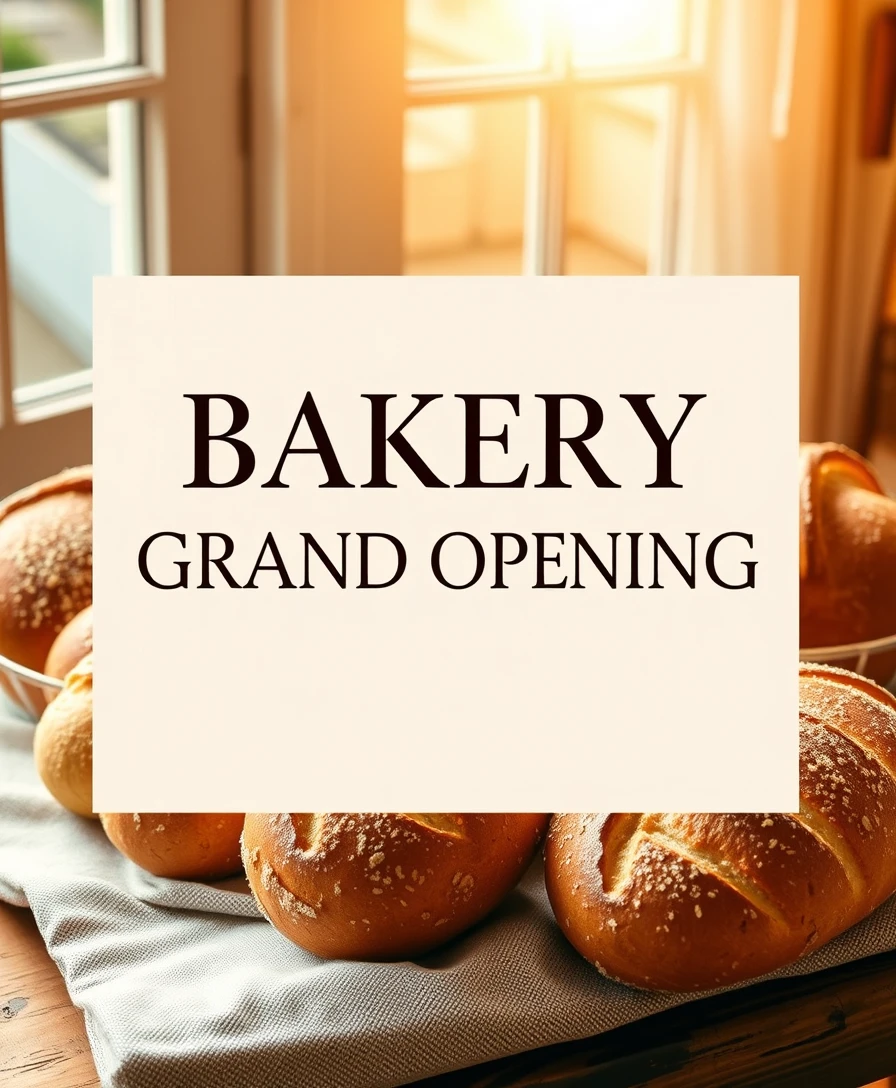
The baked version is the warning. Invented letters look finished. They are not usable. You cannot publish “Saturdly.” You cannot change 9–2 to 10–3. You can put the accepted draft on the reserved field in the Design Editor.
The honest visual is emptier, and better:
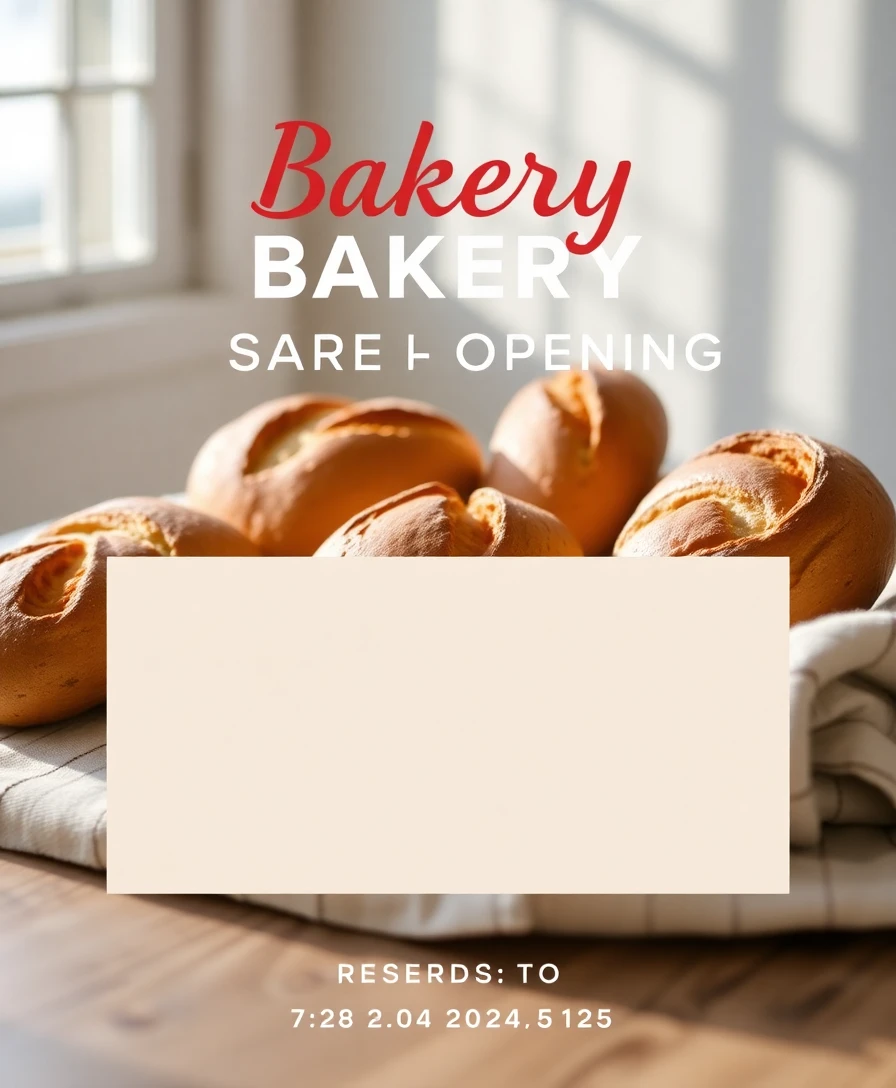
@out:opening-copy is the previous result. The flyer does not re-author the announcement. It makes a place for it.
Pictures of text are a different failure
Three cousins of this mistake show up all week.
A /poster that writes the event name in the sky. A /thumbnail that invents a title bar. A /carousel that prints the lesson on the moss. Those jobs have their own essays — poster, flyer, or banner, a thumbnail is not a poster, how /carousel stays a set you can still edit. The shared rule is the same: if the words will move, they are not pixels.
/write is also not a voiceover. /audio narrates a finished passage. Do not ask a voice to invent the script. Write it. Then attach it.
/write is not a deck. /presentation is the editable file. A picture of slides is a photograph of a meeting.
When to stay in the editor
Sometimes you should not ask AskGL to write at all. If the paragraph already exists — a listing description, a verse, a board memo — paste it. Protect it. The command does not need to author what you already approved.
Use /write when you need a first draft from facts you trust, or a shorter cut of a passage you supplied. Do not use it to invent amenities, citations, or prices.
When the draft is good enough, take it somewhere it can finish:
- Type on a sheet → Design Editor
- Slides →
/carousel, then Design Editor - Speech →
/audio, after the words exist - A landing still →
/image, with no text in the pixels
The language of the job is What AskGL is. The map is the command list.
Then open Ask. Write the paragraph. Accept it. Ask for the sheet with @out:. The words stay words.
Frequently asked questions
Can I ask /image to write the announcement on the photo?
You can. You will get a picture of words. You cannot trust the letters, and you cannot edit them. Write first. Reserve the field.
Does /write invent prices and addresses?
It should not. Facts you supply stay facts. If a number is missing, leave it out. Do not let the draft fill the gap.
Where do I finish a /write result?
In the Design Editor, as type. Or as the source for a flyer, a carousel, or a voiceover — attached with @out:, never baked into pixels.


